“Ryanair: More Like Cryin’ in the Air.” This is the title of an opinion article published in Blue & Read by Wiyot Cooks around five months ago. It is telling — many passengers perceive flying with Ryanair the same way.
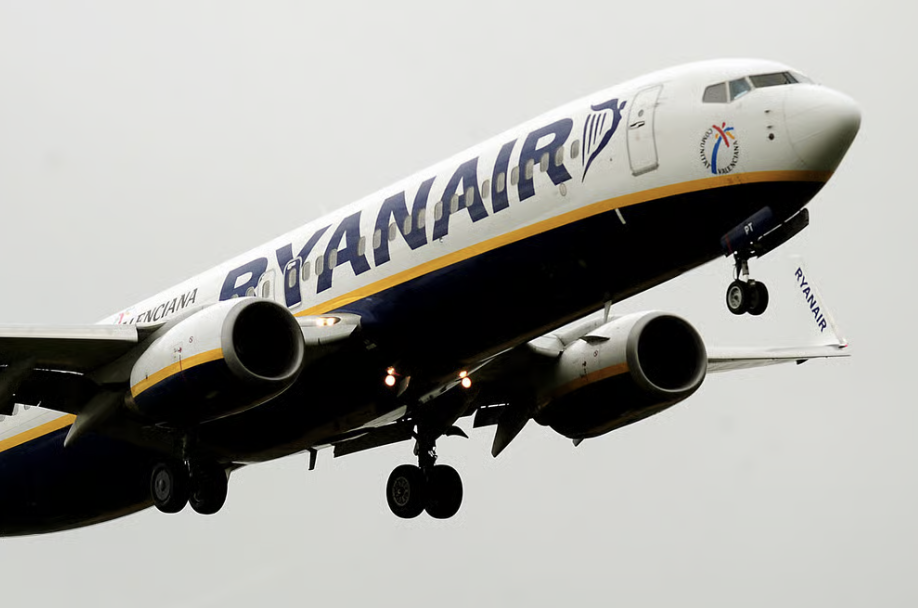
Ryanair is an ultra low-cost airline operating in Europe. As of 2024, they are the largest in the region based on annual passengers, fleet size, and number of flights. Low prices come with trade-offs: from additional fees for basic services to strict rules and minimal comfort, Ryanair has built a reputation as one of the least enjoyable airlines. In fact, last year it was ranked as an airline with the lowest satisfaction rate, obtaining an overall score of only 55% .
Yet, Ryanair successfully remains one of the most profitable airlines in Europe, with €1.61 billion profit secured in 2025. How can a company that is so locally criticized become so successful? Let’s break this down.
First, Ryanair’s ultra low-cost model prioritizes minimizing operational costs above all other business aspects. This includes charging additional fees for carrying luggage or selecting a seat, unlike medium- to high-cost airlines (consider Lufthansa). By doing so, Ryanair ensures that base ticket prices are kept extremely low while still generating revenue from optional add-ons. On board service is also minimal, with food provided on a pay basis.
The company also strategically chooses secondary airports for almost all destinations. These are smaller or less busy airports located outside major cities. A well-known case was Ryanair opening flights to Paris Vatry Chalons Airport, located 160 kilometers away from Paris city. While this may cause inconvenience for travellers, secondary airports reduce landing and operational costs, helping the airline maintain lower expenses.
But here is where the crucial part comes in. These continuous cost cuttings are not accidental — they are thoroughly designed to deliver Ryanair’s desired profit. Low fares attract price-sensitive flyers, generating huge passenger volume. In 2025 alone, Ryanair carried approximately 206 million passengers across Europe, surpassing Lufthansa—which had placed second—by approximately 60 million passengers and strengthening its market leadership.
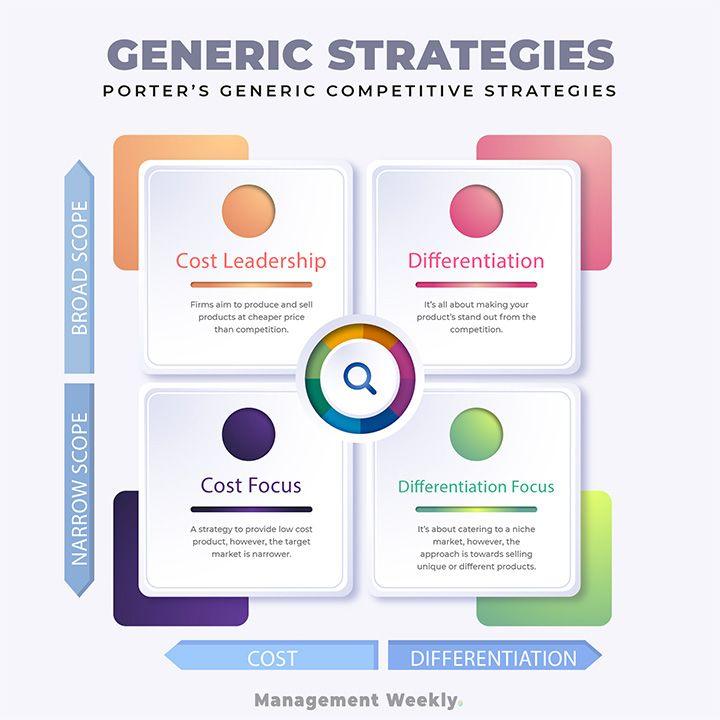
Ryanair’s decisions can be explained through the Porter’s Generic Strategies model, which allows us to identify a strategy the company chooses to prioritize. The airline stands as an example of the cost leadership strategy, in which it minimizes operational costs and generates revenue from additional services, thus enabling it to offer the lowest prices while remaining highly profitable. Low prices pay off when the demand is extremely high.
Ultimately, Ryanair’s strategy is a trade-off: passengers are willing to give up luxury, comfort, and convenience in exchange for the lowest possible fares available. Ryanair made the correct strategic decision of offering short- to mid-haul flights, since comfortable flying becomes increasingly more demanded with longer flight times.
While this strategy may be appealing, it doesn’t always work. Spirit Airlines, notoriously known for their similar ultra-low cost tactic, filed for bankruptcy in protection in 2024 and again in late 2025 due to significant financial losses. One of the main reasons for their failure was rising operational costs, highlighting a key risk of this strategy. While the airline positioned itself as ultra low-cost, meaning that keeping fares low for consumers is a crucial part of the company, the labor, fuel, and maintenance costs kept rising due to continuous inflation. As a result, Spirit’s profit per flight declined despite fares remaining relatively stable ($25 – $70 for domestic flights). Eventually, expenses outweighed revenues in 2020, and the airline has struggled to return to profitability ever since.
Going back to Ryanair, its cost leadership strategy comes at the price of limited flexibility. The airline cannot easily improve service or increase prices if they want to maintain the ultra low-cost market domination. This makes Ryanair vulnerable to external shocks and changes in demand, as it has limited ability to differentiate its services and minimize risks that could arise. Coming back to Porter’s Generic Strategies, any attempt to shift strategy brings risk of becoming stuck in the middle, where the company tries to be both low-cost and better-quality simultaneously but ends up doing neither effectively.
In conclusion, Ryanair stands as an example of a company that—despite consistently providing a negative customer experience—is highly successful. Its cost leadership strategy has proven to be extremely effective, allowing the airline to dominate the European short- and medium-haul ultra low-cost market through low fare prices that bring high passenger volumes. While risks exist, Ryanair was able to identify them early on and ensure that the company remains profitable in spite of them. Therefore its approach must continue to be managed carefully, with close attention to rising operational costs and limited flexibility.
Bibliography:
Cooks, Wiyot. “Ryanair: More like Cryin’ in the Air – Blue & Read.” Asbarcelona.com, 23 Oct. 2025, blueandread.asbarcelona.com/?p=1824.
Wikipedia Contributors. “Ryanair.” Wikipedia, Wikimedia Foundation, 30 Mar. 2019, en.wikipedia.org/wiki/Ryanair.
Marçal, Íris. “Ryanair Ranked Last in Customer Satisfaction.” Theportugalnews.com, 27 Feb. 2026, www.theportugalnews.com/news/2026-02-27/ryanair-ranked-last-in-customer-satisfaction/982966.
Varley, Len. “Ryanair Reports Full-Year Profit of €1.61 Billion.” AviationSource News, 26 May 2025, aviationsourcenews.com/ryanair-reports-full-year-profit-of-e1-61-billion/.
The Brand Cult Lab. “How Ryanair Broke Every Business Rule and Became Europe’s Most Profitable Airline.” Medium, 13 Aug. 2025, medium.com/@thebrandcult.lab/how-ryanair-broke-every-business-rule-and-became-europes-most-profitable-airline-c9604959d9c5.
TwoContinents. “Ryanair Has Left Paris-Vatry Airport.” Twocontinents.com, Two Continents, 29 Mar. 2025, twocontinents.com/blog/ryanair-has-left-paris-vatry-airport.
“Porter’s Generic Strategies | EBSCO.” EBSCO Information Services, Inc. | Www.ebsco.com, 2021, www.ebsco.com/research-starters/marketing/porters-generic-strategies.
Summerfield, Richard. “Spirit Files for Second Chapter 11 Bankruptcy.” Financier Worldwide, Nov. 2025, www.financierworldwide.com/spirit-files-for-second-chapter-11-bankruptcy.
Reuters. “Spirit Airlines Files for Bankruptcy Protection for Second Time in a Year.” The Guardian, The Guardian, 29 Aug. 2025, www.theguardian.com/business/2025/aug/29/spirit-airlines-bankruptcy-protection.