

Back in 2001, while major online booksellers thrived, Amazon was struggling.
In the early years following its founding in 1994, the company’s net loss reached over $2.8 billion and continued to grow. Most rational people would have called this a total disaster, declared bankruptcy, and found a safe corporate job. Yet we now know Amazon as a giant in e-commerce, and its founder, Jeff Bezos, is one of the richest people on the planet. How did a company whose analysts, investors, and public commentators predicted unavoidable bankruptcy manage to turn the tables and become what it is today?
We often believe in the good old formula: revenue – expenses = success. But the truth is, losing money can be exactly the point. In its early years as a bookstore, Amazon frequently sold best-selling hardcovers for 40-50% of list price, far below other competitors, earning little to no profit. Rather than signaling a failure, these losses functioned as a strategic investment that paid off in the long-term.
By selling books at a loss, Amazon ensured a consistent customer flow. People kept coming back for greater deals and frequently shared these bargains with friends, who also ended up visiting the website. Are you familiar with the concept of “leftover-budget spending”? It means that if you find an item with a great discount you didn’t expect to see, you are more likely to add something else to your basket because you now have some extra money to spend. This behavior often generates additional profit for firms.
This sell-low strategy helped Amazon grow from a niche online bookstore into a mass retailer with more than 10 million customers by the end of the 2000s. Of course, Bezos’s “get big fast” strategy was a huge gamble, but it turned out to be a success. By 1999, Amazon captured the largest share of the e-commerce industry, while other companies couldn’t catch up with the pace the company was expanding at. And remember, they were still operating at a loss! But it became clear that it was only a matter of time before they started generating sustainable profits.
Amazon highlights an important point: when a company chooses to lose money, it is often thinking long-term. In the modern market, many firms fail to recognize this, prioritizing revenue as a main objective from the very beginning of their pathway. This strategy is popular, but here’s why it might be unrealistic—customers. When your company has just been established, it’s a mistake to assume that there’s going to be a line of people waiting to buy your product. In fact, consumers are unlikely to buy from you when you don’t stand out from the other suppliers, as they don’t see unique value in your product.
Based on American businessman and Harvard professor Michael Porter, there are many ways for a company to stand out: some options include offering the lowest price, differentiating their products, and focusing on a niche market. But what Michael Porter highlighted the most is that it is not possible in the long term to adopt a mixture of these strategies. The key idea is that focus (which makes you stand out) is crucial. Currently, we can clearly see a trend where lots of startups fail by attempting to stay in the middle between multiple differentiation strategies, eventually losing in the long run.
And this is why testing the products, the market, and even yourself is arguably the best approach during the early months of a company’s life. Once the idea has proven to be worth continuing, prioritizing market share dominance can offer way more than just a profit.
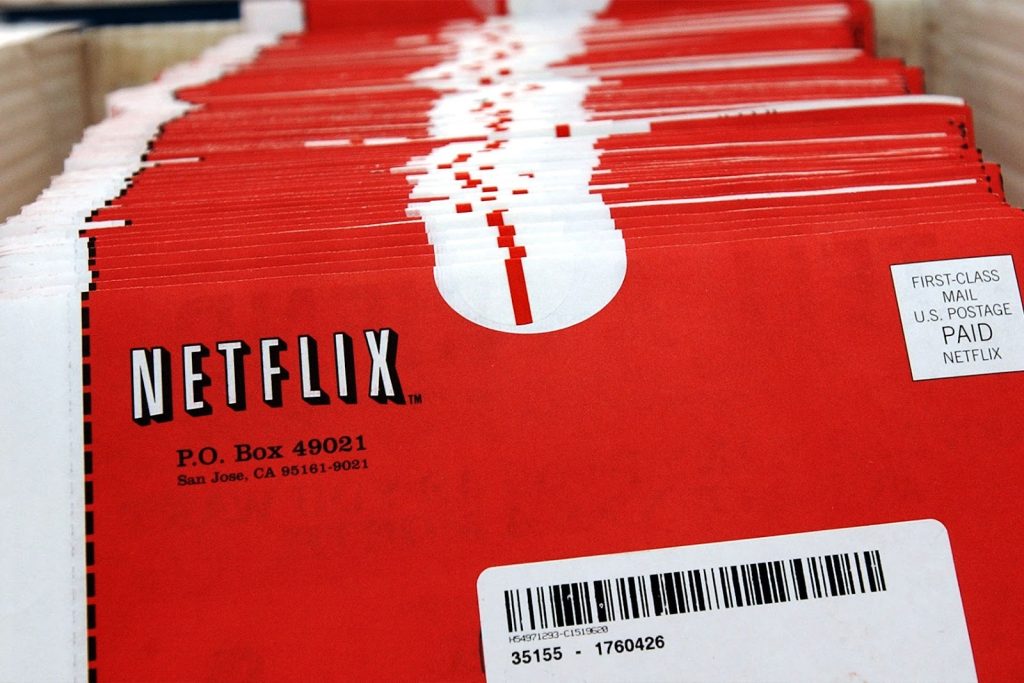
Another example is Netflix, a company that is well known for operating at a loss until recently. Founded in 1997 and initially functioning as a DVD-by-mail service, it operated at a loss for six years! With Marc Randolph as the first CEO, they deliberately reinvested revenue into marketing, logistics, and technology to grow the subscriber base instead of focusing on immediate profits. Instead of closing after a few years of short-term losses, Netflix only attracted more investments, slowly gaining market share through customer-friendly policies. In 2007, not long after the company reported its first annual net profit in 2003, they introduced a streaming service, the one we all know and use today. Learning from the company’s success, they again prioritized market share and user adoption, accepting negative free cash flow for years until approximately 2020. All combined, this journey was 23 years long, but it paid off!
This extended period without attempting to maximize profits allowed Netflix to experiment with different strategies and slowly gain market share.
All that said, I cannot stress enough the importance of standing out, maintaining focus, and differentiating your product when implementing this strategy. Have you ever heard of XciteLogic? This was a prosperous UK Tech Consultancy firm that tried losing in the short-run to gain in the long-run, but they lacked a clear, differentiated service and over‑invested in a failed standalone education‑software product. As a result, it went bankrupt in 2013, owing nearly $4 million to creditors. Short run losses are not worth anything if the long-term goals are not clearly set and individualized for the company. Choosing a good focus is only a small part of the initial process you have to go through, so don’t underestimate the rest!
In the end, losing money is not always a sign of failure. Amazon and Netflix were able to use short-term losses strategically as an investment in long-term growth. By prioritizing market share and consumer loyalty over immediate profits, firms can establish positions that competitors cannot reach. With focus and careful future planning, losses can eventually turn into billions.
So next time you consider building a multibillion corporation, I suggest considering this long-term strategy. Who knows, maybe short-term thinking is what has always stopped you!
Bibliography:
Wilhelm, Alex. “Why Amazon’s History of IPO-Era Losses Means Little for Today’s Unprofitable Unicorns.” Crunchbase News, 14 May 2019, news.crunchbase.com/public/why-amazons-history-of-ipo-era-losses-means-little-for-todays-unprofitable-unicorns/.
“Amazon Net Income by Year: FY 1996 to 2020.” Dazeinfo, 6 Nov. 2019, dazeinfo.com/2019/11/06/amazon-net-income-by-year-graphfarm/.
“Shelf Awareness for Saturday, July 27, 2013.” Shelf-Awareness.com, 2026, www.shelf-awareness.com/issue.html?issue=2049#m20901. Accessed 7 Feb. 2026.
Mogi, Ken, and Yoshi Tamori. “Purchase Patterns Affected by Budget Spending Rules.” Journal of Psychology & Psychotherapy, vol. 05, no. 06, 2015, https://doi.org/10.4172/2161-0487.1000218. Accessed 27 June 2020.
“Amazon: The Early Years (1995-1999).” Historylink.org, 2025, www.historylink.org/File/23230.
“Porter’s Generic Strategies | EBSCO.” EBSCO Information Services, Inc. | Www.ebsco.com, 2021, www.ebsco.com/research-starters/marketing/porters-generic-strategies.
Dazeinfo. “Netflix Revenue and Net Income by Year: FY 1998 to 2019.” Dazeinfo, 21 Jan. 2019, dazeinfo.com/2019/01/22/netflix-revenue-profit-by-year-graphfarm/.
Petti, Patrick. “Netflix’s Financial Journey: From Debt to Cash Flow Surge.” Highradius, 21 May 2024, www.highradius.com/finsider/netflix-financial-strategy/.
Brenner, Michael. “7 Growth Lessons from 5 Failed Companies – Marketing Insider Group.” Marketing Insider Group, 26 Mar. 2016, marketinginsidergroup.com/strategy/7-growth-lessons-learned-from-5-failed-companies/#5. Accessed 7 Feb. 2026.
Shankar, Ganesh. “Why Organizations Focused Only on Revenue Growth Are Short-Sighted.” Forbes, 5 Sept. 2024, www.forbes.com/councils/forbestechcouncil/2024/09/05/why-organizations-focused-only-on-revenue-growth-are-short-sighted/.