
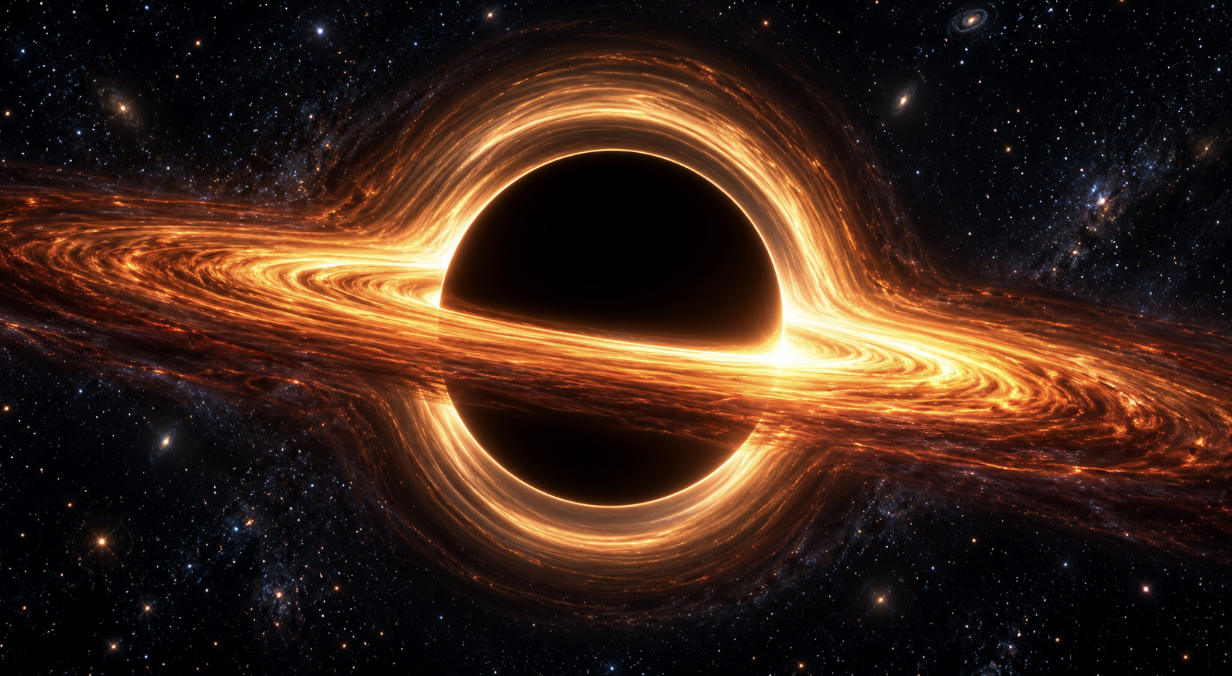
Black holes are one of the strangest things in space. They have a force of gravity so strong that if something gets too close, it cannot escape, not even light. This is why we cannot actually see a black hole itself. Nevertheless, scientists still know they are there because they can watch what happens around them. For example, stars and gas can move differently when they are close to a black hole. The gas can also become extremely hot and give off a lot of energy. Although we have some information about this scientific phenomenon, black holes are still very mysterious. To this day, scientists are still trying to understand exactly how they work and what happens inside them.
How Do Black Holes Form?
Black holes can form when a really big star reaches the end of its life. When the star runs out of fuel, it starts to collapse because it can no longer hold itself together. Sometimes this causes a huge explosion called a supernova. After the explosion, the center of the star can collapse into a very small space and transform into a black hole. But not all black holes form in the same way. Some black holes can also grow bigger by pulling in gas and other objects around them. Scientists are still studying how the biggest black holes in the universe first formed.
What Happens If You Get Close To a Black Hole?
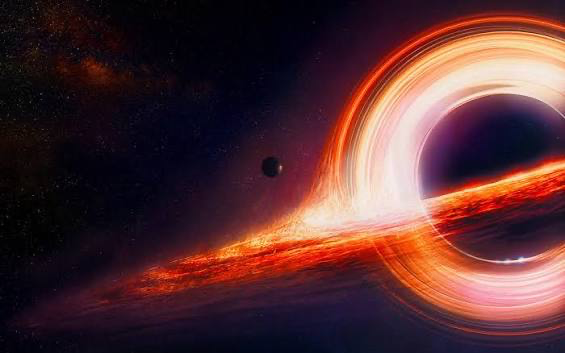
Getting too close to a black hole would be extremely dangerous because of how strong its gravity is. There is a point around a black hole called the event horizon. Once something crosses this point, it cannot escape, not even light. Another fascinating thing is that a black hole can actually stretch objects because its gravity pulls harder on the object, the closer it is to it. This is called spaghettification, which sounds funny but is actually very dangerous. Luckily, black holes are very far away from Earth, so we don’t really have to worry about one pulling us in. Scientists are still trying to understand what happens to objects after they enter a black hole.
In conclusion, black holes remain one of the universe’s most captivating and dangerous wonders. From their dramatic birth in the explosions of dying stars to their ability to stretch matter through spaghettification, these cosmic giants challenge everything we know about physics. While their invisible nature and intense gravity make them impossible to explore directly, they serve as a powerful reminder of how much we still have to learn about outer space. As technology advances, scientists will undoubtedly continue to peel back the layers of mystery to discover what secrets truly lie beyond the event horizon.
Bibliography:
Reddy, Francis. “What Are Black Holes?”NASA, 8 Sept. 2020, www.nasa.gov/universe/what-are-black-holes/.
Gohd, Chelsea. “What Happens When Something Gets ‘Too Close’ to a Black Hole?”NASA Science, 3 May 2023, science.nasa.gov/universe/what-happens-when-something-gets-too-close-to-a-black-hole/.