
| Vocabulary Terms: Progenitor cell – A cell that can develop into a specific type of cell, but has more limited potential than a stem cell. Neurons – Specialized nerve cells that transmit electrical and chemical signals throughout the nervous system. Synapses – Connections between neurons where signals are passed from one cell to another. Embryo – An early stage of development after fertilization, before the developing organism becomes a fetus. Embryonic development – The process by which an embryo grows and its cells become specialized to form tissues and organs. Gastrulation – An early stage of embryonic development when cells move and organize into three layers that will eventually form the body’s tissues and organs. Chromatin – A complex of DNA and proteins that packages DNA inside the nucleus of a cell. Pluripotent stem cells – Stem cells that can develop into almost any type of cell in the body. |
The human brain, while only making up 2% of our body weight, uses 20% of our body’s energy. It is incredibly complex, and contains approximately 86 billion neurons and an estimated nearly one quadrillion synapses. Humans are still struggling to completely understand its intricacies; the most advanced computer models and analytical techniques fall short in helping us interpret datasets that result from studying thousands of neurons simultaneously. Scientists are only recently making progress in classifying individual brain cells, and still face challenges determining its evolutionary origins. This uncertainty is why every new discovery in neuroscience is significant and draws considerable attention.
The most recent finding was that the brain consists of “two ancient nervous systems cleverly packed together.” Stanford Medicine published a study in Nature Neuroscience on September 18, 2026, which discovered that the human brain is formed from two distinct organs adjacent to one another, which evolved independently over millions of years. The senior author of the study was Kyle Loh, PhD, an associate professor of developmental biology at Stanford; researchers from the California Institute of Technology and the University of California, San Francisco also contributed.
The breakthrough came after studying the earliest moments of embryonic development, specifically the stage of gastrulation. This discovery was groundbreaking as it challenged the previous understanding that the brain develops from one progenitor cell. The scientists described that the more primitive “system” regulates heartbeat, breathing, and other basic functions, while the other is associated more with distinctive human capabilities such as poetry, math, and wondering about our own origins.
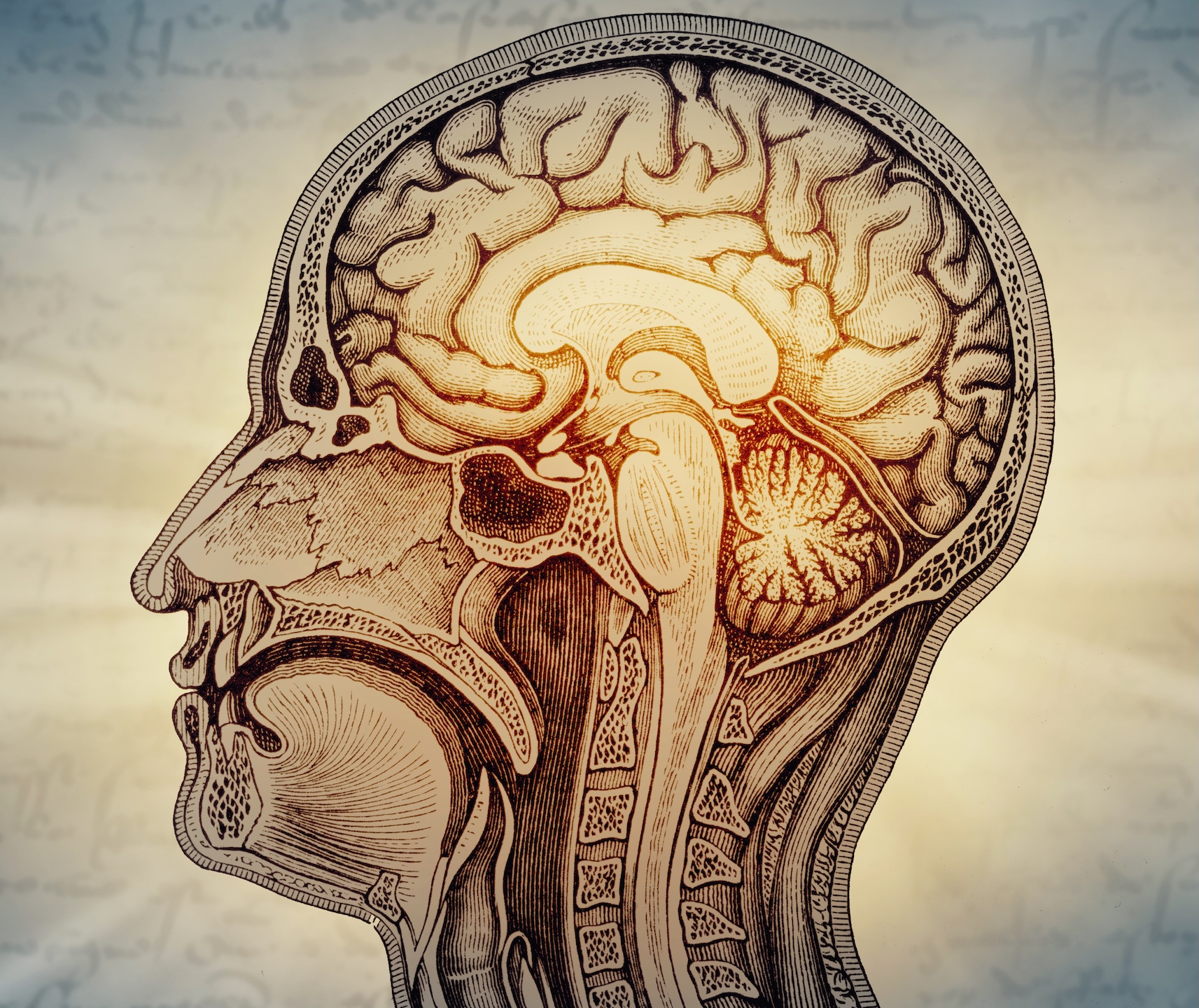
Generally speaking, the adult brain has three main regions. First, the forebrain is responsible for higher-level thinking, such as language, consciousness, and abstract reasoning. Second, the midbrain regulates vision, hearing, and motor movement. Third, the hindbrain, also referred to as the brain stem, handles other essential functions such as breathing, sleeping, and regulating our hunger urges; its neurons also control the muscles of the face, tongue, and throat which affect speech and swallowing. Ultimately, the research team found that the hindbrain follows a separate developmental pathway than the pathway that produces the forebrain and midbrain, instead of branching off from the latter.
Their findings came from examining developing mouse embryos. They identified two different populations of brain progenitor cells. First, the cells that express the Otx2 gene, which will become part of the forebrain and midbrain. Second, the cells that express the Gbx2 gene, which will form the hindbrain. The researchers found that these two populations are mutually exclusive from the earliest stages of development, meaning the cells meant to become the forebrain and midbrain never overlap with those destined to become the hindbrain.
The researchers also examined the cells’ DNA packaging, known as chromatin, which helps determine which genes cells can access and which genes are effectively inaccessible. They found that the anterior neural ectoderm, the embryonic cell population that gives rise to the forebrain and midbrain, and the posterior neural ectoderm—which gives rise to the hindbrain—have fundamentally different chromatin configurations. These differences essentially lock the progenitor cells into their respective developmental fates.
After making this discovery, the study’s authors looked back across more than 550 million years of evolutionary history and found the same two-origin brain pattern in chickens, zebrafish, and acorn worms. The latter is particularly interesting because they are distantly related to humans and share a common ancestor with us. Furthermore, jellyfish, which diverged from humans approximately 600-700 million years ago, have two nervous systems at different ends of their bodies. The researchers therefore suggest that evolution took two existing neural systems and pushed them together spatially. While having the brain as one organ would probably be more efficient, Loh suggests, humans retained this very old developmental arrangement in which the brain is produced as two separate pieces.
The next step was to take what had been learned about hindbrain development, and use human pluripotent stem cells to successfully produce functional hindbrain motor neurons in the laboratory. Producing hindbrain neurons had been a struggle of scientists for decades. Now, the newfound ability to do so has important implications for diseases affecting the hindbrain. A few examples of such diseases include Spinal Muscular Atrophy (SMA), a leading genetic cause of death in children under one years old, and Amyotrophic Lateral Sclerosis, which is often diagnosed between the ages of 40 and 70, and affects both the forebrain and hindbrain. Both diseases cause certain hindbrain neurons to gradually stop functioning. Patients eventually lose the ability to swallow, develop pneumonia when food or liquid is inhaled into the lungs, and lose the ability to breathe.
These diseases were previously very difficult to study because researchers couldn’t obtain brain-stem tissue from living patients. However, now that hindbrain neurons can be grown, researchers can be provided with a model that they can use to investigate how these diseases develop, how they affect hindbrain neurons, and how regenerative therapies could be developed. Hopefully, as medical technology continues to develop and increasing amounts of time and money are invested into neuroscience research, similar groundbreaking discoveries will emerge to bring us closer to fully understanding how our brain functions—thus helping us prevent and cure devastating neurological disorders.
Bibliography:
Conger, Krista. “Human Brain Is Two Separate Organs, Stanford Medicine-Led Research Finds.” Stanford Medicine, 18 Sept. 2026, https://med.stanford.edu/news/all-news/2026/09/two-separate-brains.html.
Allen Institute. “Why Is the Human Brain So Difficult to Understand? We Asked Four Neuroscientists.” Allen Institute, 21 Apr. 2022, https://alleninstitute.org/news/why-is-the-human-brain-so-difficult-to-understand-we-asked-4-neuroscientists.