
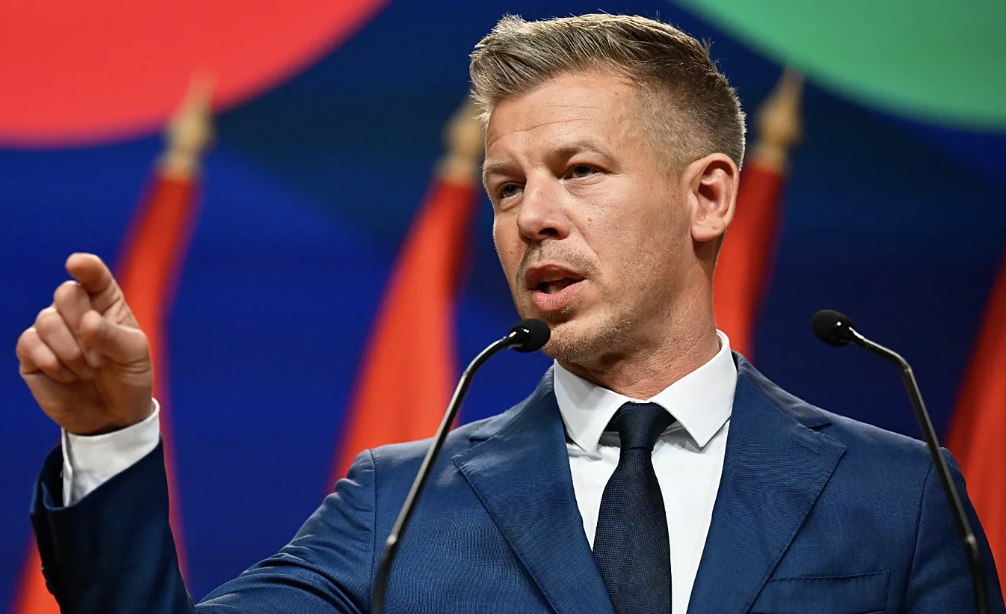
On April 12, 2026, Hungary made history. In an election that saw a 79.5% electorate turnout, Péter Magyar and his centre-right Tisza party crushed Prime Minister Viktor Orbán’s Fidesz party in a landslide, winning 138 of the 199 parliamentary seats. Orbán, who had dominated Hungarian politics for 16 years, conceded before counting had even started.
“We did it,” Magyar told a jubilant crowd gathered beside the River Danube in Budapest. “Together, we liberated Hungary and got rid of the Orbán regime.”
Who is Péter Magyar?
Magyar, a 45-year-old lawyer, was not always Orbán’s enemy. For two decades, he was an important behind-the-scenes figure within Fidesz—Orbán’s own party. But in 2024, he publicly broke ties with it. This was followed by a sex abuse scandal that forced his ex-wife, Hungary’s former justice minister, to resign. Driven by what he saw as deep-rooted corruption and anti-democratic policies, he launched the Tisza party to challenge his former allies. Magyar has been touring in small towns and villages across Hungary, even giving up to seven speeches a day, for two years straight.
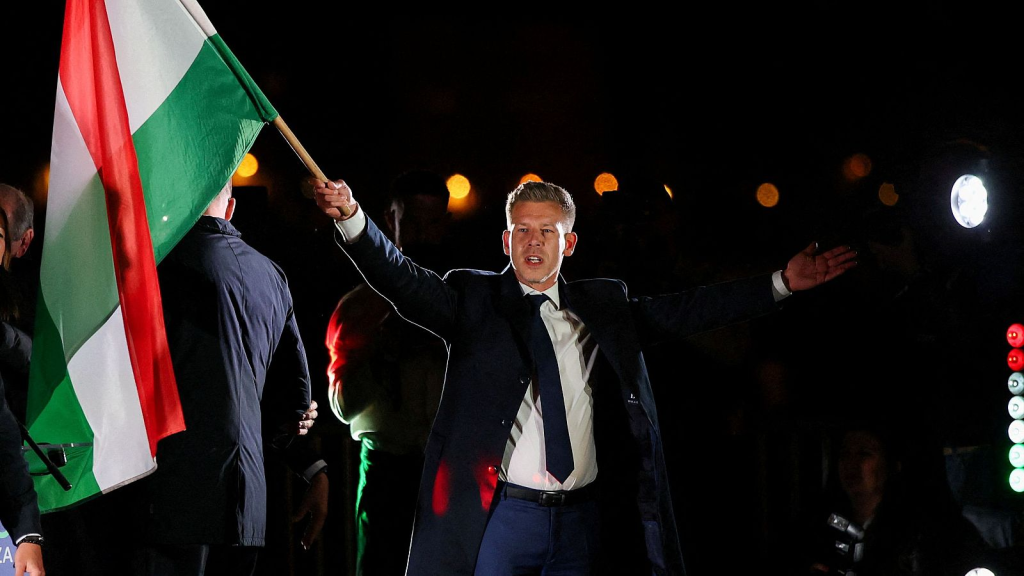
Peter Magyar is celebrating after winning the elections. Source: RTVE.es
What Was the Election Really About?
Orbán built his political brand on fear. In 2022, just weeks after Russia’s full-scale invasion of Ukraine, his party warned voters that opposing Russia’s invasion might drag Hungary into the conflict, and his fear-based strategy worked. But in 2026, according to the polls presented by an independent research institute, the voters were also exhausted by what BBC correspondent Nick Thorpe called “sixteen years of political experimentation.” Orbán had rewritten the constitution, reshaped the courts, and restructured the economy in his party’s image. On election night, Hungarians delivered their verdict: enough was enough.
What Happens Now?
Magyar was sworn in as Prime Minister on May 8, 2026. He has promised to reverse the Orbán-era reforms to education and healthcare, restore judicial independence, and suspend Hungary’s public broadcaster’s news programming, which he said functioned as a “factory of lies” for Fidesz. Since he was chosen under a supermajority, he also plans to remove officials appointed under Orbán from key institutions.
The ripple effects extend far beyond Hungary. Under Prime Minister Viktor Orbán, Hungary had blocked a 90 billion euro loan to Ukraine and often took positions that sided with Russia. As a result, many European leaders welcomed the election outcome, viewing it as a potential shift in Hungary’s relationship with the European Union. In fact, the EU Commission President Ursula von der Leyen wrote that “Europe’s heart is beating stronger in Hungary tonight.” Russia, on the other hand, declined to send congratulations, highlighting concerns that the new leadership may undermine Hungary’s previous allyship with Russia.
The Bigger Question
As one Budapest voter told the BBC, “He’s someone you cannot be sure of, but we’re at a point where we need hope for something better.” That tension between hope and uncertainty captures exactly where Hungary stands today. Winning an election, even in a landslide, is the easy part. What comes next is the true test of whether one vote can really undo sixteen years.
For young people especially, this election carries a particular resonance. Many of those who flooded the streets of Budapest on election night had grown up not knowing a Hungarian leader besides Orbán. For them, this was not just a political shift—it was a generational one. The crowds that chanted “Russians go home” and waved EU flags were, in many cases, the same generation that will now live through whatever Magyar builds in Orbán’s place.
Whether Magyar succeeds or stumbles, Hungary’s election is a reminder that democratic change, when it comes, can come fast. Sixteen years of consolidated power collapsed in a single night. For students following global politics, that is perhaps the most important lesson of all: elections still matter, and voters, when they decide they’ve had enough, can move mountains.
Works Cited
Armas, Sara Gómez. “El Conservador Péter Magyar arrolla en Hungría y pone fin a 16 años de hegemonía política de Orbán.” RTVE.es, 12 Apr. 2026, www.rtve.es/noticias/20260412/orban-piedra-zapato-ue-pierde-elecciones-hungria-tras-16-anos-poder/17020237.shtml, https://doi.org/17020237.
Gábor Tanács, and Rita Konya. “Péter Magyar Says New Government Could Take Power at Beginning of May.” Euronews, euronews.com, 15 Apr. 2026, www.euronews.com/my-europe/2026/04/15/hungarys-peter-magyar-says-new-government-could-take-power-at-beginning-of-may. Accessed 12 May 2026.
Kirby, Paul. “Orbán Era Swept Away by Péter Magyar’s Hungary Election Landslide.” BBC, 13 Apr. 2026, www.bbc.com/news/articles/cd9vg782kx7o.
Roberts, Michael. “Hungary: The End of the Orban Era – CADTM.” CADTM, 13 Apr. 2026, www.cadtm.org/Hungary-the-end-of-the-Orban-era. Accessed 12 May 2026.“Viktor Orbán Ousted after 16 Years in Power as Hungarian Opposition Wins Election Landslide.” BBC News, 10 Apr. 2026, www.bbc.com/news/live/c2d8zw2d3rkt.