
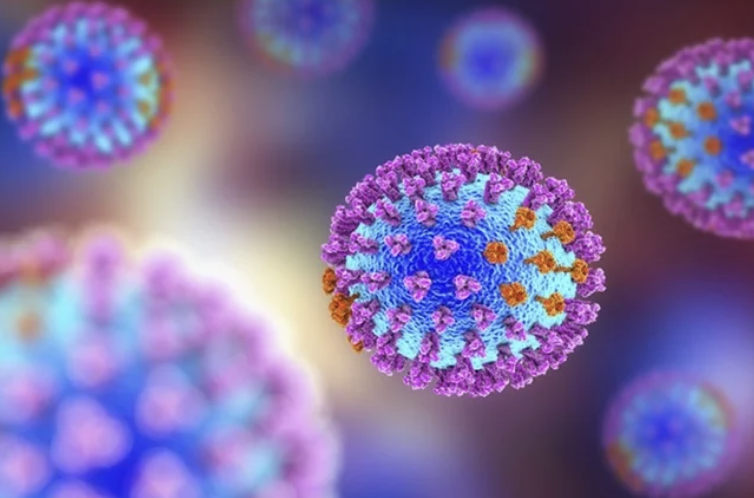
A tiny fungus that almost killed every human being on earth. It sounds like a horror movie to most people, but this was, in fact, a true story. A microscopic organism that you can’t even see was spreading everywhere and killing millions of people before doctors even knew what was going on. This happened in 1918, and yet most people have never heard the complete story.
In the spring of 1918, a soldier named Albert Gitchell showed up to the doctor at a military base in Kansas. He had a fever, a sore throat, and a headache. Pretty normal symptoms for a sick person, right? Except that by lunch on that same exact day, over one hundred other soldiers had the exact same symptoms—and it only continued to spread. The sickness spread to other bases, then to other states, then countries, until it was present in almost every continent.
Most people called this illness the Spanish Flu. But the thing is, it didn’t even start in Spain. Spain just reported the presence of the disease more honestly since they did not participate in World War I, and therefore didn’t have to keep it a secret. All the other countries hid how severe the situation was so they didn’t look weak. So Spain got stuck with the name even though it wasn’t even their fault.
Millions of people get the flu every year, and most of the time they just feel gross for a week and then recover. So why did this one in particular kill 50 to 100 million people, more than the amount of people who died in the war itself?
The weirdest thing about this flu was that it was killing healthy young adults the most—the opposite of how the common flu usually works. Scientists speculate it had to do with a cytokine storm of sorts. A cytokine storm is when the body’s immune system rapidly releases too many pro-inflammatory proteins, called cytokines, that it starts destroying your own lungs. So if you were young and healthy, your body would actually fight too hard, which was what would kill you.
Some people died within a single day of getting sick. Hospitals ran out of room. In Philadelphia, there were so many bodies that the demand for coffins was not met. What’s more, some villages in Alaska were wiped out completely. Overall, it was a time of chaos and destruction all over the world.
For years, scientists couldn’t fully study the original virus because it was long gone. However, in the 1990s, a researcher named Johan Hultin decided to travel to a remote village in Alaska where people who died in 1918 were buried in ice. The frozen ground kept things preserved for years.
Johan Hutlin was 72 years old when he did this. He travelled all the way there by himself with a few tools and dug around until he found remains that still had lung tissue in them. He brought samples back, and the scientists were able to use them to reconstruct the 1918 flu and figure out what it was and why it was so deadly.
The reason this still matters in modern times isn’t just because it’s a cool or scary story. It’s because when COVID hit in 2020, scientists immediately went back and looked at this event from 1918 to figure out what to do. Looking backwards taught us things like why you shouldn’t hold a big public meeting, or why some people are at a greater risk to the illness than others. The flu of 1918 did not repeat itself exactly, but shaped the way we could protect ourselves from COVID-19.
Works Cited
Barry, John M. “The Site of Origin of the 1918 Influenza Pandemic and Its Public Health Implications.” Journal of Translational Medicine, vol. 2, no. 1, 20 Jan. 2004, p. 3, www.ncbi.nlm.nih.gov/pmc/articles/PMC340389/, https://doi.org/10.1186/1479-5876-2-3.
CDC. “CDC Archives.” Archive.cdc.gov, 2019, archive.cdc.gov/#/details?url=www.cdc.gov/flu/pandemic-resources/1918-pandemic-h1n1.html.“Johan Hultin, Pathologist Who Helped Unearth Origins of 1918 Influenza Pandemic, Dies at 97.” Washington Post, www.washingtonpost.com/obituaries/2022/02/03/johan-hultin-influenza-scientist-dies/.