
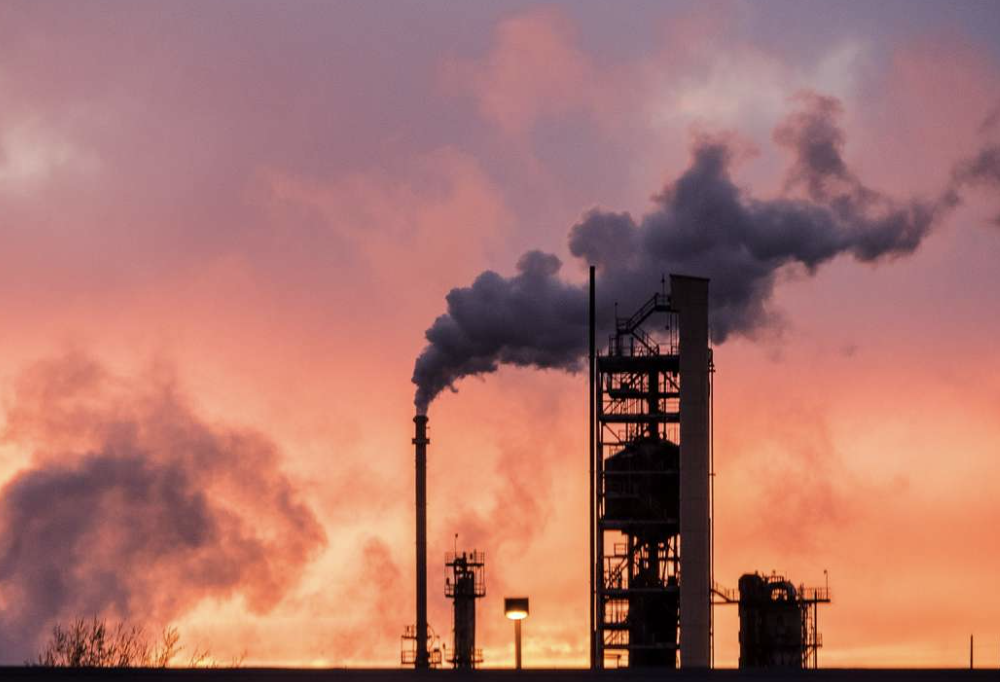
Global warming, or climate change, could potentially be one of the most heavily discussed issues of current times in the news. Each article piles onto the next, trying to enforce new solutions, complain about new struggles, and either put down or bring up a country for not doing something about it. As important and helpful as these articles are to raise awareness and set us on the right path to eliminate climate change, what’s just as important, if not more important, is merely answering the question: where are we with climate change at the moment?
To address this, it is important to consider the overall course of climate change. Global warming trends have shifted a lot in recent years. Though many changes are problematic, many positives are also present. While temperatures continue to rise and fall in extremes that seem to grow larger each year, we are also beginning to implement new methods of energy production and limiting carbon emissions, allowing us to better control and reduce climate change as a whole.
While determining whether global warming has predominantly improved or worsened is a difficult question to answer simply, knowing both the positives and negatives of the current state of climate change is crucial to ultimately understand how we can alleviate the effects of global warming on our planet.
Recently, many aspects of our planet have begun to deteriorate due to global warming. Climate change continues to intensify in many regions, causing extreme weather and temperatures worldwide. Countries including Australia, Chile, and Patagonia are suffering from catastrophic wildfires that burn through dry land and nature. Conversely, heavy rains are causing flooding in places such as South Africa, Mozambique, and particularly Indonesia, which experienced a disastrous landslide caused by heavy rainfall that ended up killing over 50 people.
As previously mentioned, temperatures have started reaching extreme highs and lows. January of this year was the coldest it’s been since 2010 for Europe, while the rest of the world suffered in extreme heat, having experienced the fifth hottest January ever recorded. The change in global temperature has continued to rise rapidly since 1986, and it seems this rise will persist in the years to follow.
Nevertheless, temperature changes like these aren’t as simple as just making the Earth warmer. With air temperatures increasing, water temperatures are increasing too, triggering ice to melt and ultimately making habitats for wildlife unlivable. Antarctica is losing ice at a terrifying rate of around 150 billion tons per year, causing global sea levels to rise approximately 3.4 millimeters per year.
The detrimental effects of climate change on our planet have led to catastrophic impacts on temperatures, weather, habitats, and more. However, this picture is not complete without also mentioning the pros. New technologies and improvements in lifestyle have allowed us to control and decrease certain impacts of global warming.
One of the largest causes of climate change in the world is the emissions of greenhouse gases during energy production. Luckily, as of 2005, these emissions have gone down by 17.4% in the United States, and are continuing to decrease in current times. All around the world, old fossil fuels such as coal are being replaced by new, renewable energy sources, such as wind and solar power. As a result of these changes, CO₂ emissions have decreased by 7% since pre-COVID times.
One of the main reasons for these improvements is the decrease in the cost of renewable energy sources. Since 2023, 96% of solar and wind energy-producing facilities have generated energy at a lower cost than gas and coal plants. Due to this—as well as the overall benefits of using renewable energy instead of fossil fuels—renewable energy sources are nearing the point of overtaking oil, gas, and coal as the world’s primary energy source.
Furthermore, other eco-friendly inventions are becoming more well-known, assisting in the reduction of climate change. E-bikes are gaining popularity and are viewed as efficient alternatives to cars or public transportation. Additionally, electric cars—whose sales have seen a 3300% increase between 2015 and 2024—have also surged in popularity. The use of these new technologies has allowed us to better control carbon emissions. Continuing to increase their usage sets us on the right path to bringing carbon emissions down to a minimum.
Climate change is constantly evolving. It’s improving and worsening at the same time. There’s no easy answer that summarizes what’s to come; whether we’re on the right or wrong path. While temperatures continue to shift irregularly, melting ice and raising sea levels, new sustainable technologies continue to clean the air and reduce greenhouse gas emissions. What follows, however, is not yet determined, and the future of the Earth relies on the actions we take every day.
Bibliography
“Evidence.” NASA Science, 23 October 2024, https://science.nasa.gov/climate-change/evidence/. Accessed 3 May 2026.
“Extreme heat, cold, precipitation and fires mark the start of 2026.” World Meteorological Organization WMO, 26 January 2026, https://wmo.int/media/news/extreme-heat-cold-precipitation-and-fires-mark-start-of-2026. Accessed 3 May 2026.
Lubber, Mindy. “2026 Outlook: Clean Energy, Nature, And Water Drive Global Resilience.” Forbes, 12 January 2026, https://www.forbes.com/sites/mindylubber/2026/01/12/2026-outlook-clean-energy-nature-and-water-drive-global-resilience/. Accessed 3 May 2026.
Lucano, Santiago. “The UN Places Renewable Energies at an Irreversible Turning Point.” Moeve, 3 March 2026, https://www.moeveglobal.com/en/planet-energy/2030-goals/un-report-renewable-energy-tipping-point-2026. Accessed 3 May 2026.
Nuccitelli, Dana. “Where things stand on climate change in 2026 » Yale Climate Connections.” Yale Climate Connections, 9 January 2026, https://yaleclimateconnections.org/2026/01/where-things-stand-on-climate-change-in-2026/. Accessed 3 May 2026.
“U.S. Emissions – Center for Climate and Energy SolutionsCenter for Climate and Energy Solutions.” Center for Climate and Energy Solutions (C2ES), https://www.c2es.org/content/u-s-emissions/. Accessed 3 May 2026.