
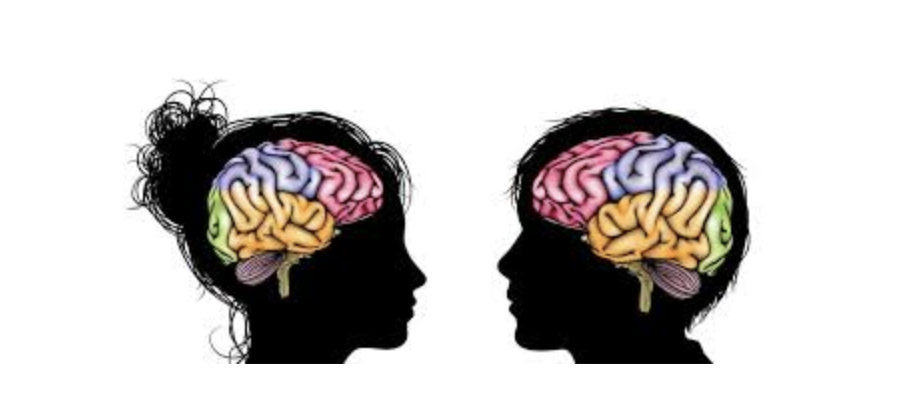
“It wasn’t me! Blame my brain.” It sounds like the perfect excuse, but is it actually true? Surprisingly, science suggests that there is a bit of truth to it. The teenage brain is still under major construction, which affects emotions, decision making, motivation, and sleep.
A huge reason teenagers act impulsively is because their prefrontal cortex – the part of the brain that inhibits impulsive behavior and is responsible for planning and self-control – is not fully developed. Research shows that this region doesn’t reach full maturity until about 25 years old. Because of this, teens may act quickly and take risks adults would avoid, choosing what feels good short-term over what will be good for them long-term. At the same time, the amygdala, the emotional center of the brain, is especially active during adolescence. Teens often rely more heavily on it than adults do when processing emotions, which leads to stronger reactions and occasional mood swings. In other words, they aren’t “overreacting,” but their emotional space is simply more sensitive while the thinking space catches up.
Another factor is dopamine. This is the neurotransmitter associated with reward and motivation. Teens experience higher dopamine responses, making exciting experiences feel even more rewarding. This helps explain why friendships and fun activities are so appealing, sometimes more so than schoolwork or chores. This isn’t simply irresponsibility: it is the brain encouraging exploration. The teen brain is wired to seek novelty as part of developing independence. Sleep is also affected. Teenagers naturally produce melatonin – the sleep hormone – later at night than adults or children. Due to the natural hormonal changes that occur during puberty during melatonin production, they tend to stay up later.
There are situations where the brain can really take control without anyone even realizing it. For example, stress can feel overwhelming and teens may react more strongly to pressure, criticism, or failure than adults would do in the same situation. Habits, like constantly checking your phone or procrastinating on homework, can also be harder to break because the brain is especially sensitive to rewards and patterns of behavior. Even small decisions, like choosing to skip breakfast or staying up late, can have bigger effects on mood and energy that it would in other age groups. These everyday experiences show that the brain’s ongoing development has a direct impact on how teens live and make choices.
So, can we blame the brain? In many ways, yes. It is still developing and rewiring itself, which can lead to unpredictable behavior. But this stage is also a huge advantage. Brain plasticity is at one of its highest levels during adolescence, giving greens an incredible ability to learn new skills and shape their identity. So while the brain may take some of the blame, it is also what gives adolescence its unique energy and potential.
Bibliography:
(MLA citations)
American Academy of Child & Adolescent Psychiatry. “Teen Brain: Behavior, Problem Solving, and Decision Making.” American Academy of Child and Adolescent Psychiatry, AACAP, Sept. 2017, www.aacap.org/aacap/families_and_youth/facts_for_families/fff-guide/the-teen-brain-behavior-problem-solving-and-decision-making-095.aspx.
BBC. “BBC – Science & Nature – Human Body and Mind – Teenagers.” Bbc.co.uk, 2014, www.bbc.co.uk/science/humanbody/body/articles/lifecycle/teenagers/sleep.shtml.
Board of Directors. “Health Advisory: Melatonin Use in Children and Adolescents.” American Academy of Sleep Medicine – Association for Sleep Clinicians and Researchers, aasm.org/advocacy/position-statements/melatonin-use-in-children-and-adolescents-health-advisory/.
Edwards, Scott. “Deciphering the Teenage Brain.” Hms.harvard.edu, 9 Aug. 2010, hms.harvard.edu/news/deciphering-teenage-brain.
The Teen Brain: Still under Construction – FosterEd. foster-ed.org/the-teen-brain-still-under-construction/.University of Rochester. “Understanding the Teen Brain .” Rochester.edu, 2024, www.urmc.rochester.edu/encyclopedia/content?ContentID=3051&ContentTypeID=1.